Suicide Awareness Month: Speak, Listen and Reach Out
30 Sep 2026 · Health
Suicide is a serious public health concern that affects individuals, families, workplaces, schools and communities. Yet suicide is preventable, and meaningful support can begin with something as simple as noticing that someone is struggling, listening without judgment and helping them connect with appropriate support.
During Suicide Awareness Month, Caritas of Hope Foundation joins communities in encouraging open conversations about mental health and suicide prevention.
Our message is simple:
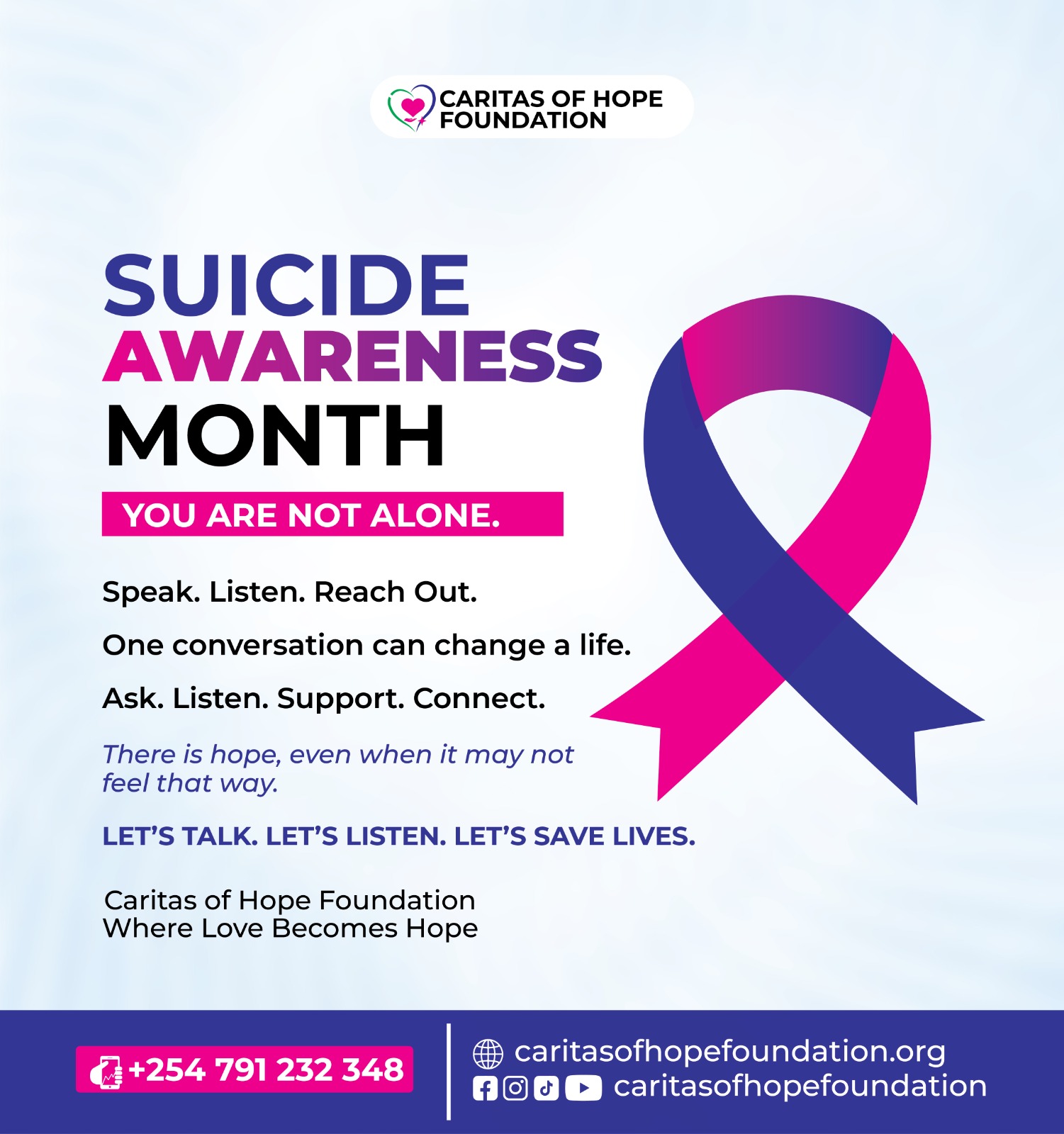
Speak. Listen. Reach Out.
Why Suicide Awareness Matters
Suicide is not only an individual issue. Its effects can extend to families, friends, colleagues and entire communities.
According to the World Health Organization (WHO), more than 720,000 people die by suicide globally each year, with the majority of deaths occurring in low- and middle-income countries. WHO also identifies suicide as a major public health concern requiring coordinated action across health systems, communities, schools, workplaces and other sectors.
In Kenya, the Ministry of Health has also highlighted suicide as an important public health issue and called for stronger integration of mental health services into primary healthcare.
These figures represent people—not statistics alone. Behind every suicide is a person, a story, relationships and people who may be affected for years.
That is why awareness matters.
Suicide Prevention Begins With Connection
One of the most important messages in suicide prevention is that people should not have to face overwhelming distress alone.
Someone experiencing suicidal thoughts may be dealing with depression, substance-use problems, relationship difficulties, financial pressures, chronic illness, trauma, loss, isolation or an acute personal crisis. WHO notes that suicidal behaviour can have multiple contributing factors and that some suicidal crises can occur during periods of intense distress or overwhelming life stress.
This means prevention cannot depend on one person, one profession or one institution.
It requires families, friends, schools, employers, healthcare professionals, community organizations and governments to work together.
Know the Warning Signs
There is no single sign that can definitively tell us that someone is suicidal. However, changes in behaviour, communication or emotional state can indicate that someone may need support.
Possible warning signs can include:
Talking about wanting to die or end their life
Expressing hopelessness or feeling that there is no reason to live
Saying they feel like a burden to others
Increasing withdrawal or isolation
Significant changes in sleeping or eating patterns
Giving away important possessions
Saying goodbye in unusual or concerning ways
Looking for ways to harm themselves
Increased agitation, distress or emotional instability
Sudden changes following a major loss, crisis or traumatic experience
WHO resources identify several of these behaviours as warning signs that require attention.
A warning sign should not be dismissed simply because someone appears to be functioning normally on the outside.
Sometimes the person who needs help is the person who has become very good at hiding that they need it.
What Can You Do If Someone Is Struggling?
You do not need to have all the answers to support someone.
You can start with a conversation.
1. Speak
Ask how the person is doing.
Instead of immediately trying to solve the problem, create space for them to speak.
You might say:
“I've noticed that things seem difficult for you lately. How are you really doing?”
Or:
“I'm here to listen. You don't have to go through this alone.”
Talking about suicide does not inherently cause someone to become suicidal. WHO states that talking openly about suicide can provide an opportunity for someone to consider alternatives and seek help.
2. Listen
Listening is more than hearing words.
Give the person your attention. Avoid immediately judging, blaming, dismissing or comparing their experience with someone else's.
You do not have to say:
“Everything will be fine.”
You can simply say:
“I hear you.”
“That sounds really difficult.”
“Thank you for telling me.”
“Let's find help together.”
3. Reach Out
If someone appears to be at immediate risk of harming themselves, do not leave them to manage the crisis alone.
Help them connect with appropriate emergency, healthcare or mental-health support and involve a trusted person where appropriate.
Professional assessment and follow-up are important components of suicide prevention. WHO's LIVE LIFE approach specifically emphasizes early identification, assessment, management and follow-up for people affected by suicidal behaviour.
Suicide Prevention Is Everyone's Responsibility
Suicide prevention cannot be addressed through awareness campaigns alone.
WHO's evidence-based LIVE LIFE approach identifies four key interventions:
Limiting access to means of suicide
Promoting responsible reporting of suicide by the media
Developing socio-emotional life skills among young people
Early identification, assessment, management and follow-up of people affected by suicidal behaviour
These interventions demonstrate why suicide prevention needs a whole-community approach.
Schools can strengthen emotional and social skills.
Workplaces can create healthier environments and referral pathways.
Healthcare providers can identify risk and provide appropriate care.
Families and friends can notice changes and offer support.
Community organizations can create awareness and connect people with services.
The media can communicate about suicide responsibly and avoid harmful reporting practices.
For Parents, Teachers and Employers: Pay Attention
Young people and adults may communicate distress in different ways.
A person may not directly say, “I am suicidal.”
Instead, they may say:
“I can't do this anymore.”
“Nobody cares.”
“Everyone would be better without me.”
“There is no point anymore.”
Such statements should not automatically be interpreted as suicidal intent, but they can be important opportunities to check in, listen and connect the person with appropriate support.
Early support matters.
Breaking the Silence Around Mental Health
Stigma can make it harder for people to seek help.
Someone experiencing emotional distress may fear being judged, labelled, rejected or misunderstood. This is one reason conversations about suicide and mental health need to be approached with compassion rather than shame.
We need communities where saying “I am struggling” is met with support rather than judgment.
We need workplaces where mental health can be discussed responsibly.
We need schools where young people can develop emotional and social skills.
We need families where difficult conversations can happen safely.
And we need healthcare and community systems that make appropriate support easier to access.
There Is Hope, Even When It May Not Feel That Way
At Caritas of Hope Foundation, we believe that hope can be strengthened through compassion, connection, access to support and practical action.
Our Suicide Awareness Month message is therefore not simply about raising awareness.
It is about encouraging action:
Speak.
Listen.
Reach Out.
One conversation may create an opportunity for someone to ask for help.
One person choosing to listen may help someone feel less alone.
One timely connection to professional support may make a critical difference.
A Message From Caritas of Hope Foundation
You are not alone.
If you are struggling, reach out to someone you trust and seek appropriate professional or emergency support, particularly if you are in immediate danger.
If someone you know is struggling, do not assume that silence means everything is okay.
Ask. Listen. Support. Connect.
Because suicide prevention is not only about saving lives in moments of crisis.
It is also about building communities where people feel seen, heard, valued and supported.
Let's Talk. Let's Listen. Let's Save Lives.
Caritas of Hope Foundation
Where Love Becomes Hope.
Frequently Asked Questions
What is Suicide Awareness Month?
Suicide Awareness Month is a period dedicated to increasing awareness about suicide, promoting conversations about mental health, reducing stigma and encouraging people to seek and provide appropriate support.
What are common warning signs of suicide?
Warning signs can include talking about death or suicide, expressing hopelessness, withdrawing from others, feeling like a burden, major behavioural changes, giving away possessions or looking for ways to harm oneself. Warning signs should be taken seriously and assessed in context.
How can I help someone who may be suicidal?
Listen without judgment, take concerning statements seriously, encourage professional support and help the person access appropriate emergency or mental-health services when necessary.
Does talking about suicide encourage suicide?
WHO states that talking openly about suicide can give a person an opportunity to consider alternatives and seek help. Conversations should be conducted calmly, respectfully and responsibly.
Can suicide be prevented?
Yes. WHO identifies several evidence-based suicide-prevention interventions, including limiting access to lethal means, responsible media reporting, strengthening socio-emotional skills and early identification and follow-up of people affected by suicidal behaviour.
Where can someone in Kenya seek mental-health support?
A person experiencing significant distress should consider contacting a qualified mental-health professional or healthcare facility. Someone in immediate danger should seek emergency medical assistance or go to the nearest emergency department.